
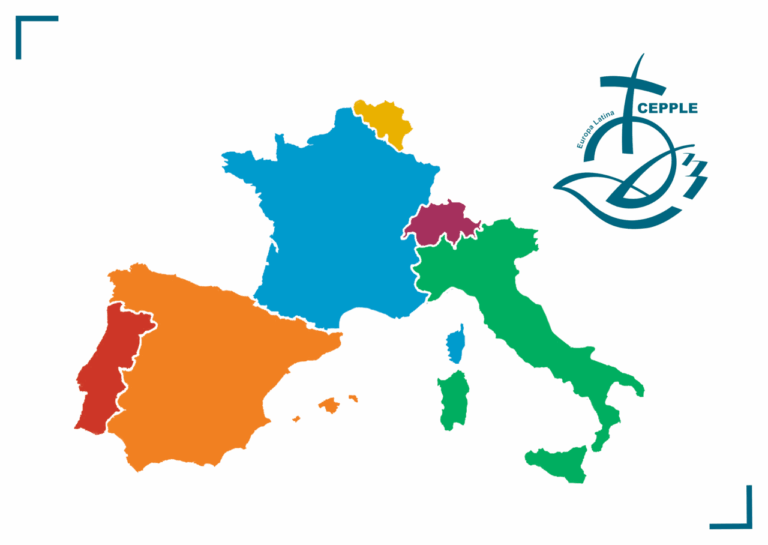
The Conference of Protestant Churches of the Latin Countries of Europe (CEPPLE) recently celebrated the 75th anniversary of its founding. The Conference of Protestant Churches of the Latin Countries of Europe (CEPPLE) brings together the Protestant churches of Belgium, Spain, Italy, Portugal, and French-speaking Switzerland. These churches – all located in traditionally Roman Catholic countries – experience their minority status not simply as a statistical reality but as a calling to find new strategies and tools for witness and sharing the Gospel.
In anticipation of the anniversary, Sabina Baral, from the Office for Communication and Ecumenical Relations of the Waldensian Tavola, interviewed its president, the Waldensian pastor and former Moderator, Gianni Genre, who is pictured below. The original Italian version of this interview can be found here.
Question: Can you describe the focus of CEPPLE’s celebrations?
President Gianni Genre: CEPPLE, which was founded in 1950 in Torre Pellice, emerged from a need for solidarity and communion among the Protestant minority churches of Latin countries. CEPPLE´s motto is “We do not do separately what we can do together,” which is a fitting motto for our small ecumenical organization, which continues to serve with the clear understanding that only together can our churches look to the future with confidence. Unfortunately, Europe as a whole is still struggling to find its identity and place in this globalized world which is dominated by three or four large opposing blocs. In fact, Europe’s political weight is close to zero due to the nationalist movements that seem to be gaining more traction every day. For these reasons, Europe´s churches must demonstrate greater awareness of the world and represent a sort of vanguard and example in our respective countries. Our meeting was an attempt to take stock of the challenges to democracy, which is now being questioned almost everywhere. The participants in the discussion included leaders of CEPPLE’s various member churches. We were joined by members of the Conference of Churches on the Rhine, an organization with which we maintain an intense dialogue.
In 1950, when CEPPLE was founded, dictators still ruled Spain and Portugal, and Italy was still rebuilding from fascism. Those were not good times for Protestant churches in any of those countries. How are the Protestant churches in Southern Europe doing today?
Even though the Protestant churches in Southern Europe all operate under democratic governments, they face difficult situations. In Spain and Portugal, as well as in Italy and Belgium, they are statistically infinitesimal in size. In France and Switzerland, there has been a significant decline, not only in the numbers of their members but also in the number of people offering themselves to serve in the various ministries the churches in Southern Europe need to function effectively. Some Swiss churches, to which until a few decades ago a majority of the people in their respective regions belonged, have had to close their theology faculties. In France, the situation is similar, and efforts are being made to address the lack of pastors by establishing new forms of ministry.
And what about the role of churches in the public sphere?
In the public sphere, the voices of our churches are still struggling to be heard. That´s why it is essential that we remain united, rejecting the multiple fears that leave everyone weaker and more frightened. Fear cannot be the answer to faith, and CEPPLE also exists to seek an antidote to this fear that so characterizes our time. If we focus only on our internal problems, we will become victims and no longer able to lift our gaze to the mission God has given us.
In 2012, CEPPLE became a regional group within the Communion of Protestant Churches in Europe. What contribution can CEPPLE make to European Protestant ecumenical life as a whole?
CEPPLE can help us be a little better equipped to address the minority status that now affects all churches, including Roman Catholic churches. Being a minority also brings opportunities and freedoms to CEPPLE´s member churches that must be recognized and valued. We need to find a little courage as well as open ourselves toward those – and there are many – who are haunted by the restlessness of spiritual exploration. There are also many people whom we are unable to reach, for various reasons, starting with our somewhat rigid structures, tied to regulations that no longer correspond to today’s reality. They are women and men ready to journey with us on a “synodal” path, in the etymological sense of the term, of “journeying together.” Without too much brashness, but also without embarrassment, we can still bear witness to a Word that is not ours but to which we owe a service. It is this Word that can still transform today what is most difficult to change: the hearts of human beings.
