
During several snowy days in January, Kevin Frederick, the president of the American Waldensian Society, had free time to read a number of old American Waldensian Society newsletters. Some of the newsletters that he read date to 1921. In this article, Kevin summarizes what these newsletters reveal about impact of Fascism and war on Italian Waldensians.
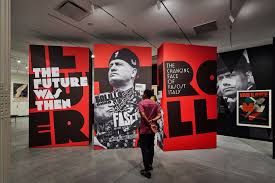
In October 1922, Benito Mussolini seized power as il Duce or Fascist dictator of Italy. Almost immediately Fascists began directing heavy-handed violence at anyone who dissented to their rule. In northern Italy, Mussolini’s Fascist government required that French sounding names of Italian communities and families be changed to Italian sounding names. By the 1930s, a national summer youth program teaching Fascist doctrine and promoting fitness and military preparedness was required for all Italian youth. Large Italian corporations were strong armed to serve the Fascist government. Outspoken dissenters were rounded up, beaten, and jailed. During the war, Jews and political dissidents were “disappeared” if they did not manage to escape to neutral nations. In this fear-filled context, some Waldensian pastors and their congregations remained silent hoping to avoid the ire of the Fascist government. With the passage of time, however, a growing number of Waldensians, especially young Waldensians, did speak out. Their speaking out made them targets of retribution. As the war progressed, many Waldensians and others were attacked by extreme Fascist groups for their “failure to promote the war spirit.”
As the war progressed, most Italians faced shortages of food, medical supplies, and clothing. Allied bombing of Italy rose exponentially in 1943, and after the fall of Mussolini in July 1943, the Nazis took control over Italy. In September 1943, the Allies began the slow 19-month-long process of liberating Italy from the south to the north.
Under German control, hundreds of Waldensian young men were faced with conscription in the German army or Wehrmacht. Countless young men fled to the Cottian mountains and lived as resistance fighters. They engaged in sabotage of factories, destroyed bridges, attacked German supply lines, and liberated communities from German occupation.
Catherine Anderson, who 80 years ago was the Executive Secretary of AWS, wrote: “One of the most notable chapters in the resistance movement in northern Italy was the stubborn stand taken by Waldensians until the very day of the German surrender. Enraged by the guerilla tactics of the Waldensians, a German colonel addressed his men in the public square of Torre Pellice in February of 1944, urging them to ‘go out and kill, kill, kill.’ That day the Nazis killed 16 people in a single village, and a few days later, two Waldensian pastors and eight members of the Waldensian College were imprisoned in Pinerolo. This was the consequence of partisans attacking German barracks in Bobbio Pellice and taking 45 soldiers as prisoners. To spare the lives of ten Waldensians who were at the heart of the community’s resistance, the partisans returned the 45 soldiers, but the struggle of the few against the many continued.”
In a newsletter dated July 1944, Virgilio Sorrani, the Moderator of the Waldensian Church wrote: “Pastors have been arrested and threatened with being shot, others have been killed, and homes set on fire. Many of our churches from Turin in the north down to southern Italy and Sicily have been either damaged or destroyed. Some of our communities have been dispersed by the ‘Storm.’ Through it all, pastors and members have renewed their consecration to God.” Put another way, these acts of repression made Waldensians of all ages respond with overt and covert forms of resistance.
An AWS newsletter dated April 20, 1945, reports that “on February 11, 1945, the Germans bombed several communities in the Waldensian Valleys including Torre Pellice, Bobbio Pellice, Villar Pellice, and Prali. A Waldensian physician from Torre Pellice was hanged, and 16 other Waldensians were shot. After the bombing, only a few outbuildings were still intact, and the Germans sent tanks from Turin to complete the work so that not a stick was left standing. In the process, several hundred Waldensians were killed.”
By war’s end in May 1945, hundreds of Waldensians were left homeless joining millions of Italians who were left destitute.
With the end of the war, the suffering of Italians did not end. Even though they faced shortages of food, clothing, shelter, and medical supplies, and a lack of a working economy, many young Waldensians dedicated their lives to rebuilding their communities and the nation around the principles of faith.
The war crystallized the sense of call of the Waldensian Church to embody the love, peace, and justice of Jesus Christ in Italy and throughout the world. Waldensians also worked tirelessly to rebuild their society and their personal lives. But they continued to face challenges and obstacles.
The author, the Rev. Dr. Kevin Frederick, pictured below, is the president of the American Waldensian Society and the now retired former pastor of the Waldensian Presbyterian Church in Valdese, North Carolina.
